
Buyers' Guide: Eggs

What is cage-free vs free range vs organic?
Cage-free eggs are from hens that must be allowed to move around, usually in some sort of housed environment to protect from predators. Free-range hens must be allowed to move freely outside. Organic eggs come from hens that are fed organic feed. Eggs laid by vegetarian fed hens are also available.
What are the benefits of unwashed eggs vs washed eggs?
Unwashed eggs have a bacterial bloom on them that allows you to keep them on your counter. (Sometimes longer than they would keep in the fridge.) However, unwashed eggs also sometimes have straw and feces stuck to them. These are perfectly safe to eat if you wash them just before you use them. If you purchase washed eggs or wish to wash the eggs yourself, they must be stored in the refrigerator.
What is candling and why is it important?
Candling is when the farmer holds an egg in front of a light source to inspect inside the shell. This will show the farmer if the egg contains a ‘surprise’ such as a blood spot or even a chick. If you have ever had un-candled farm fresh eggs, you may have experienced a ‘surprise egg’ or two. Any experienced egg farmer will know what candling is and be willing to candle eggs for you.
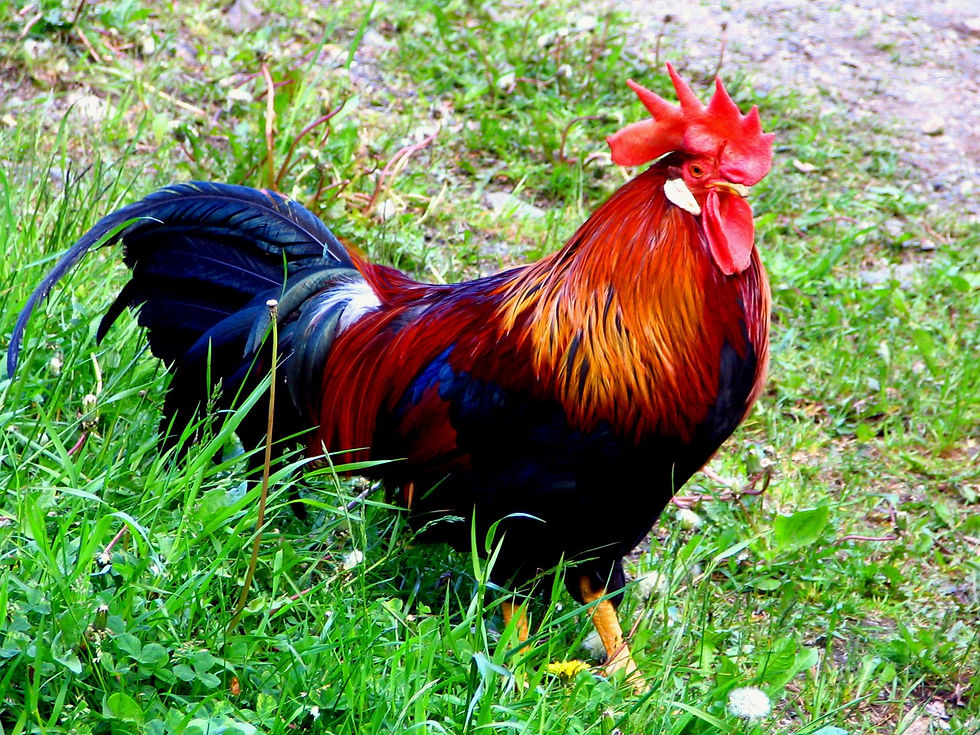
Why have a rooster anyway?
The rooster performs two important functions. First, he warns and protects the flock from predators. This is particularly important for free-range chickens. Second, I have heard from several sources, the rooster leads the hens to food. Without the rooster the free-range hens might not find enough food on their own to produce eggs. Some people believe fertilized eggs are better for you, while others prefer unfertilized. Many vegetarians prefer their eggs from farmers with no roosters, because then there is no loss of potential life.
How to tell if farm fresh eggs are fertilized.
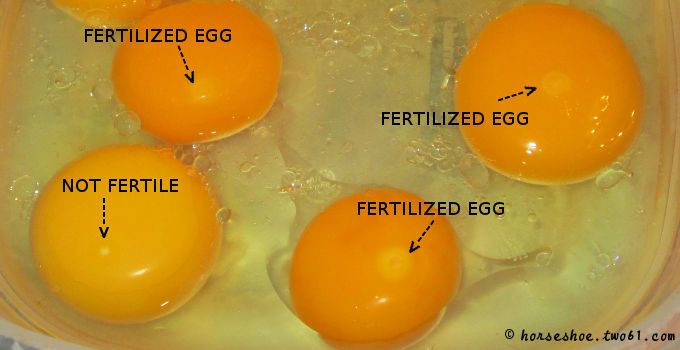
Fertilized eggs are relatively easy to spot. A fertilized egg will have a bullseye type spot on the yolk where the fertilization took place. Be aware that many unfertilized eggs have a little spot on the yolk. This is not necessarily fertilized. A fertilized egg will have a larger spot that looks more like a bullseye.
Pasteurized or unpasteurized
Pasteurization is the process by which a food item is heated to a set temperature to kill harmful bacteria. In eggs, unpasteurized eggs have not been treated to kill harmful bacteria on the shell. Most farm fresh eggs are not pasteurized.
“Most (farm fresh) eggs are unpasteurized, meaning they have not been heated to kill harmful bacteria that may reside on the shell.
Because of this, pregnant women and people with compromised immune systems should avoid unpasteurized eggs or ensure that they’re completely cooked with no runny or gelatinous yolk before eating them.
In addition, if you’re allergic to chicken eggs, you may also be allergic to quail, duck, goose or other eggs. You should practice extreme caution if you want to test your tolerance for these eggs and only do so under the supervision of a medical professional (11Trusted Source).
It’s also possible to be allergic to other eggs even if you don’t have a chicken egg allergy. If you have any concerns, you should discuss them with your healthcare provider (12Trusted Source). “
Most store-bought eggs are also unpasteurized and you should check the packaging if you are looking for pasteurized eggs.
What is Salmonella?
“Salmonella is a bacterium capable of causing a food borne illness called salmonellosis. Its symptoms include nausea, vomiting, diarrhea, stomach cramps, headaches, and fever.
Usually, salmonellosis is not life threatening. However, it can be deadly in certain high-risk populations, such as children, pregnant people, older adults, and those with compromised immune systems.
… eggs can occasionally be contaminated with the bacteria (27Trusted Source, 28Trusted Source, 29Trusted Source, 30Trusted Source).
To avoid developing a foodborne illness from … eggs, always rinse the outside of your eggs under running water before cracking them open. Make sure to cook the egg whites and yolks to at least 160°F (71°C) (31Trusted Source, 32).”
What the shell?
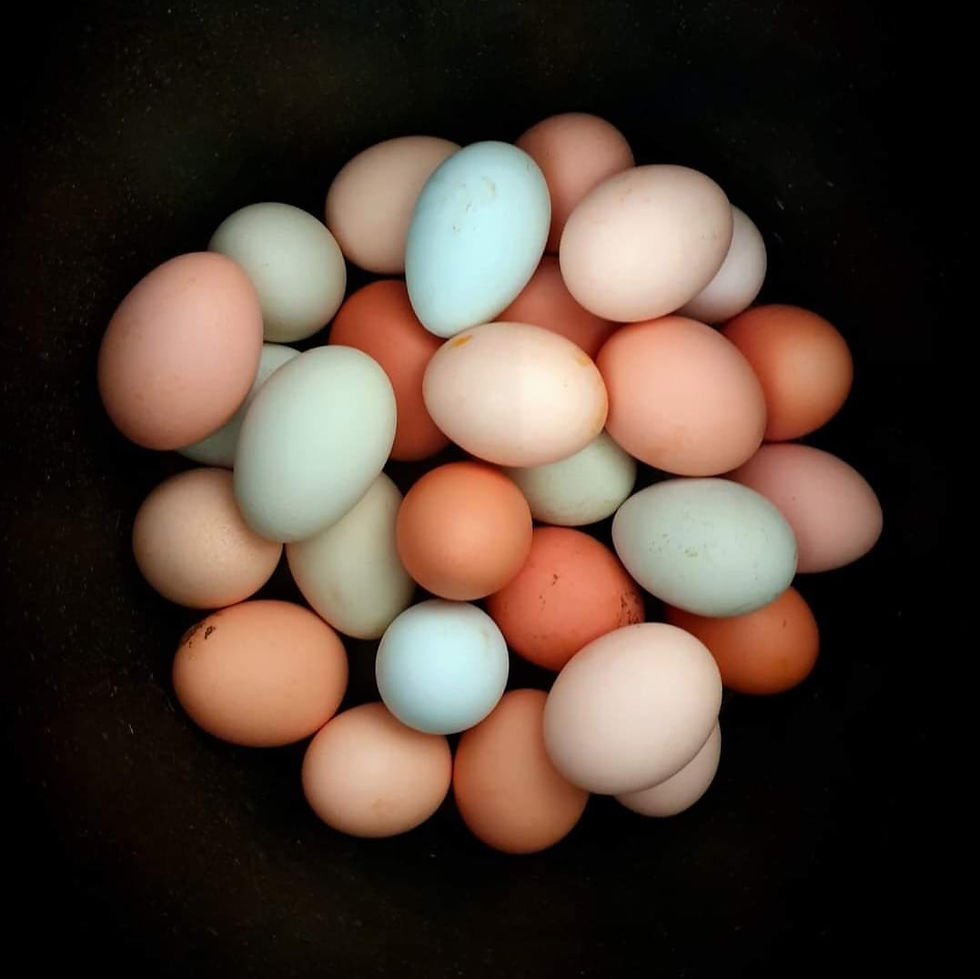
Shells come in a variety of colors and textures. From brown, to blue, green, and spotted, shells come in a variety of colors other than white. The color is determined by the breed of chicken laying the egg, and while some egg connoisseurs will tell you all the differences between eggs, in general the flavor is the same. Some yolks might be yellower or orange-ish and some might be creamier than others.
Quail & Duck Eggs
Quail Eggs-
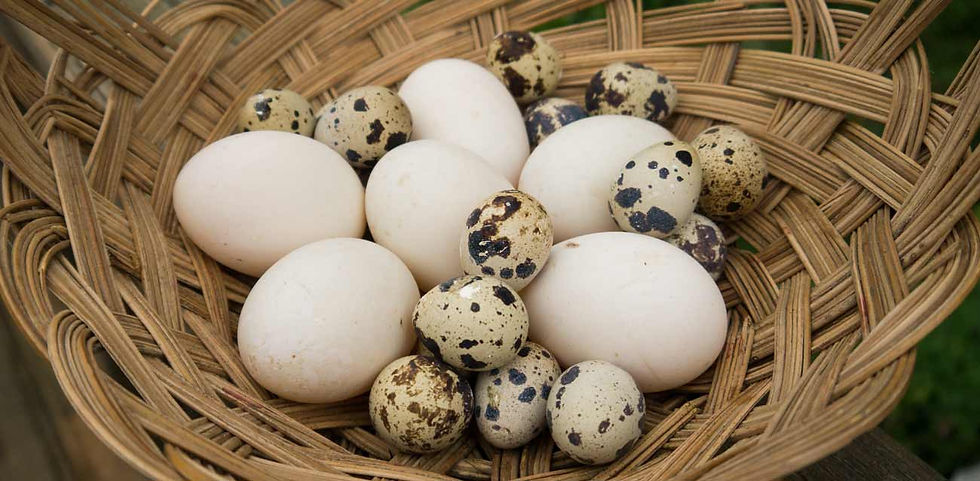
Considered the tiny but mighty egg. “A single quail egg provides a significant chunk of your daily vitamin B12, selenium, riboflavin, and choline needs, along with some iron — all in a serving that contains only 14 calories.
Selenium and riboflavin are important nutrients that help your body break down the food you eat and transform it into energy. Selenium also helps ensure healthy thyroid function (2Trusted Source, 3Trusted Source).
One quail egg (9 grams) contains (1Trusted Source):”
Calories: 14
Protein: 1 gram
Fat: 1 gram
Carbs: 0 grams
Fiber: 0 grams
Choline: 4% of the Daily Value (DV)
Riboflavin: 6% of the DV
Folate: 2% of the DV
Pantothenic acid: 3% of the DV
Vitamin A: 2% of the DV
Vitamin B12: 6% of the DV
Iron: 2% of the DV
Phosphorus: 2% of the DV
Selenium: 5% of the DV
Quail eggs (about 10 eggs) | Chicken eggs (about 2 large eggs) |
Calories | |
158 | 148 |
Fat | |
11 grams | 10 grams |
Protein | |
13 grams | 12 grams |
Choline | |
48% of Daily Value | 61% of Daily Value |
Riboflavin | |
61% of Daily Value | 32% of Daily Value |
Vitamin B12 | |
66% of Daily Value | 43% of Daily Value |
Iron | |
20% of Daily Value | 9% of Daily Value |
Duck Eggs-
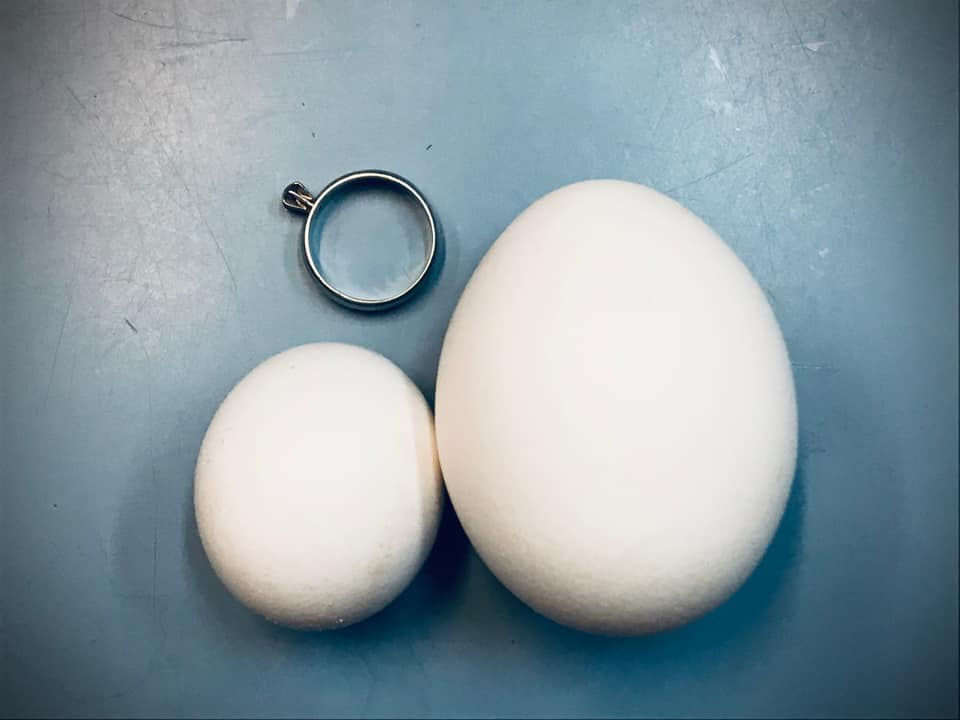
Duck eggs are much like chicken eggs except 50-100% bigger. This means each duck egg equals 1 ½ to 2 chicken eggs.
“The yolks also differ in both size and color. While the yolks of chicken eggs are usually a pale or bright yellow, duck egg yolks are a deeper shade of golden orange. Compared with a chicken yolk, a duck yolk tends to appear more vibrant.
Duck egg yolks are also larger, partly because duck eggs are generally larger than chicken eggs.
The vibrant yolk of a duck egg not only looks bold, but some people think it gives the egg a richer flavor as well. People often describe duck egg yolks as tasting creamier than chicken egg yolks.
Overall, duck eggs and chicken eggs taste similar. However, the flavor of duck eggs may be more intense than that of chicken eggs.”
Here are the nutritional profiles for 3.5 ounces (100 grams) of cooked duck and chicken eggs (4Trusted Source, 5Trusted Source).”
Duck Egg | Chicken Egg |
Calories | |
223 | 149 |
Protein | |
12 grams | 10 grams |
Fat | |
18.5 grams | 11 grams |
Carbs | |
14 grams | 16 grams |
Fiber | |
0 grams | 0 grams |
Cholesterol | |
276% of Daily Value | 92% of Daily Value |
Choline | |
36% of Daily Value | 40% of Daily Value |
Copper | |
6% of Daily Value | 7% of Daily Value |
Folate | |
14 % of Daily Value | 9% of Daily Value |
Iron | |
20% of Daily Value | 7% of Daily Value |
Pantothenic acid | |
| 24% of Daily Value |
Phosphorus | |
16% of Daily Value | 13% of Daily Value |
Riboflavin | |
28% of Daily Value | 29% of Daily Value |
Selenium | |
62% of Daily Value | 43% of Daily Value |
Thiamine | |
10% of Daily Value | 3% of Daily Value |
Vitamin A | |
23% of Daily Value | 18% of Daily Value |
Vitamin B6 | |
15% of Daily Value | 8% of Daily Value |
Vitamin B12 | |
168% of Daily Value | 32% of Daily Value |
Vitamin D | |
8% of Daily Value | 9% of Daily Value |
Vitamin E | |
13% of Daily Value | 8% of Daily Value |
Zinc | |
12% of Daily Value | 9% of Daily Value |
Size Matters
Most recipes call for large or extra-large chicken eggs. So how do you convert recipes to use farm fresh, quail, duck, goose, or any other egg? The answer is to simply measure your eggs.
1 large chicken egg = 3 ¼ Tbsp
1 extra-large chicken egg = 1/4 cup
Safe handling of eggs according to the FDA can be found at www.fda.gov/food/buy-store-serve-safe-food/what-you-need-know-about-egg-safety
(Contains excerpts from healthline.com and FDA.gov)

Comments